
Sagar Informatics Pvt. Ltd. delivers structured Multi-Location Logistics Control through Logistics Mitra, an enterprise-ready Logistics Management Software built for logistics companies operating across multiple branches, cities, and hubs.
Our system centralizes pickup management, dispatch coordination, delivery tracking, billing, COD reconciliation, and compliance workflows — ensuring operational consistency and real-time visibility across your entire logistics network.
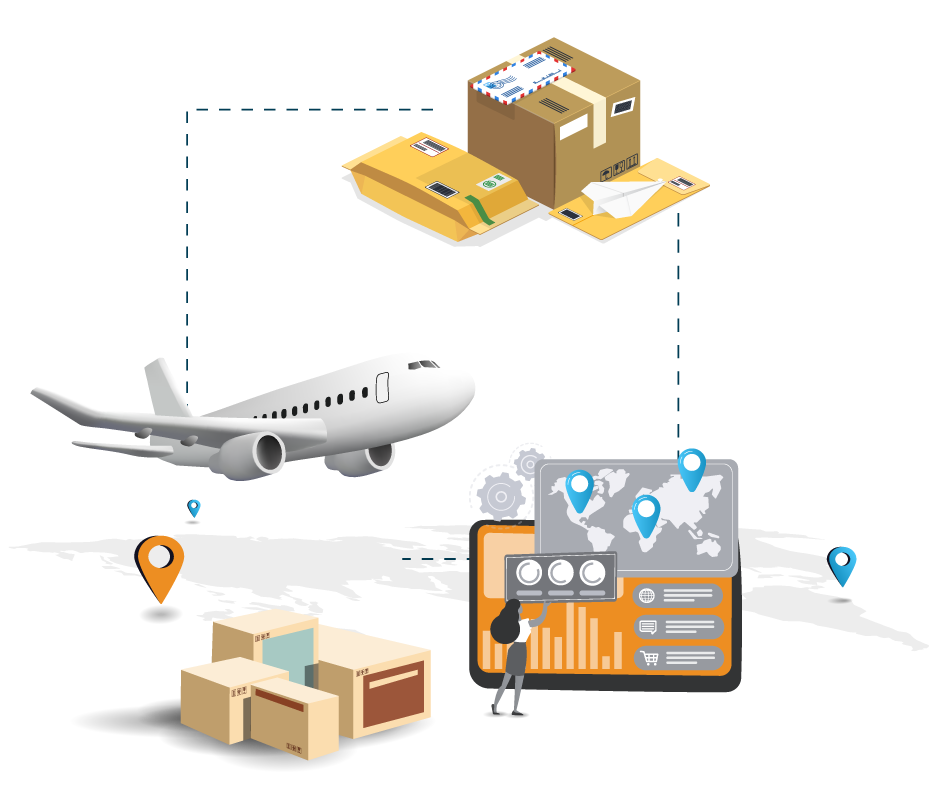
Multi-Location Logistics Control refers to managing logistics operations across multiple branches, hubs, and cities through one centralized system.
As logistics networks expand geographically, coordinating pickup teams, warehouse hubs, delivery staff, and billing departments becomes complex. Logistics Mitra connects all locations into a unified platform, enabling standardized workflows, controlled execution, and real-time visibility across the entire logistics network.
 Centralized pickup and shipment management across branches
Real-time tracking and coordination between hubs and locations
Standardized workflows for dispatch and delivery operations
Automated billing and COD reconciliation across branches
Location-wise operational visibility and performance control
Centralized pickup and shipment management across branches
Real-time tracking and coordination between hubs and locations
Standardized workflows for dispatch and delivery operations
Automated billing and COD reconciliation across branches
Location-wise operational visibility and performance control
Our logistics management software helps companies coordinate multi-location logistics operations efficiently while maintaining operational accuracy, transparency, and financial control.
Logistics businesses operating across multiple locations often face:
As the network grows, fragmented systems create inefficiencies and revenue risks.
Logistics Mitra establishes a centralized control framework across all branches and hubs through an integrated Supply Chain Automation System.
Logistics Mitra supports complex multi-client operations through integrated 3PL Management Software workflows.
All branches record pickups and shipment details through a unified workflow, ensuring consistent documentation and accurate tracking across locations.
Arrival scans, transfer manifests, and inter-branch movement are recorded digitally, maintaining complete in-transit visibility.
Delivery teams use structured workflows with OTP, photo, and signature-based POD capture to ensure secure and verified delivery closure.
Invoices are generated automatically based on shipment data, while COD collections are tracked and reconciled systematically across branches.
E-Way Bills, invoices, and compliance records are managed centrally to reduce regulatory risks and documentation gaps.
Logistics Mitra provides reports on branch shipment volume, delivery TAT, location-wise revenue, and COD/billing status. These insights help improve coordination and optimize performance across the entire logistics network.
Logistics Mitra standardizes operations across all branches and hubs in a structured sequence:
Each location records shipment details through standardized workflows, ensuring clean and consistent data capture.
Shipments are manifested and routed between branches and hubs with centralized monitoring.
Management gains live visibility into shipment movement and operational status across all cities and branches.
Deliveries are confirmed through secure digital verification methods, ensuring accurate documentation.
Billing and COD workflows are processed systematically, reducing financial discrepancies.
Dashboards provide branch-level operational and financial insights for informed decision-making.
With 19+ years of enterprise logistics software expertise, Sagar Informatics builds structured systems aligned with Indian multi-branch logistics workflows.
We help logistics companies manage distributed networks with centralized control, operational clarity, and financial accuracy.
IT company offering a suite of software & mobile application development services across various industry verticals. We facilitate the development of an innovation culture. With our breakthrough solutions, businesses can challenge the limits and gain a competitive advantage.


 Head Office